
Protect your devices from Malicious Hacking with Emproof Nyx
Address memory safety issues in languages such as C/C++ and protect your systems.

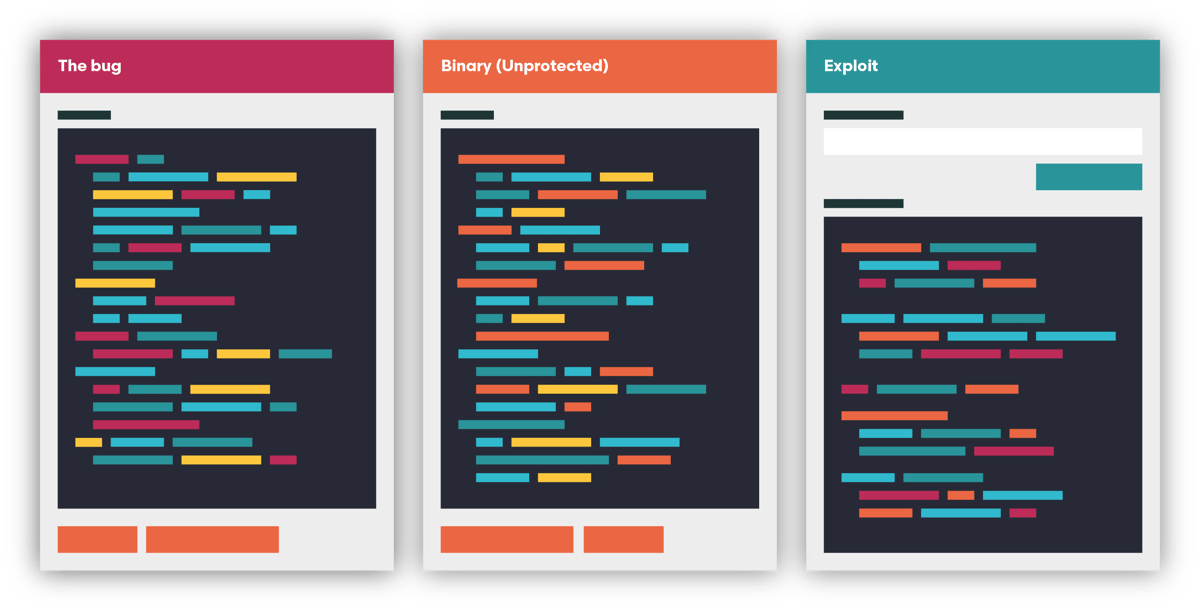
C/C++ Source Code
C/C++ are considered memory-unsafe languages primarily due to their reliance on manual memory management, which is a common source of memory corruption and errors.
- Complex codebases and risky features like pointer arithmetic make bugs difficult to detect.
- Memory safety issues contribute to about 70% of severe security vulnerabilities in major tech companies.
- Static code analysis tools often miss runtime or complex bugs and can produce false positives and negatives.
Why might static code analysis tools be insufficient for detecting memory safety issues in C/C++ code?
Static code analysis tools scan for unsafe patterns but do not execute the program, leading to limitations like false positives and false negatives. These tools often miss complex or domain-specific bugs, as they lack runtime context. For example, a study found that three static analysers together identified only 4.5% of bugs, highlighting both their usefulness and the significant number of bugs they fail to catch.
I have 100s of unit tests, am I safe?
Unit tests often fall short by missing edge cases and rarely achieving full code or value range coverage, which means they can easily overlook vulnerabilities. Even with extensive experience, developers might miss issues due to limited testing scenarios. Typically, in-house testing uncovers 10-20 defects per 1,000 lines of code, with around 0.5 defects per 1,000 lines in released products. Projects with functional safety certification show improved results. The defect rates showcase the high likelihood of memory corruption bugs in larger codebases, often reaching and surpassing the 7-digit range of lines of code.





Hacking Protection with Emproof Nyx
Emproof Nyx offers state-of-the-art protection against hacking attempts, ensuring the integrity and safety of embedded systems. Our cutting-edge technology is designed to secure devices across various applications, providing peace of mind in a world where cyber threats are ever-evolving. Our solution is ideal for:
- Microcontroller with C/C++ or other memory unsafe languages: ARM Cortex-M, RISC-V devices, and more.
- Devices that have some connectivity (e.g. network based) or user-input.
- Compiler lacking support – most open-source compilers such as GCC/clang.
- Bare-Metal/RTOS.
Unrivalled Anti-Hacking Defence
Prevents hacking attempts for all embedded systems

Zero Day Prevention
Guards against unknown vulnerabilities, ensuring your system stays secure even before patches are available.

Malware Protection
Defends against malware attacks, which are frequently launched through exploited vulnerabilities.

Advanced Threat Barrier
Robust security measures to thwart sophisticated and persistent cyber-attacks, safeguarding sensitive data and operations.

Architecture-agnostic. Built for real-world constraints.
From Arm Cortex-M to RISC-V, x86, and beyond, Emproof Nyx integrates at the binary level — with no source code, no redesign, and no disruption.
Control Flow Integrity: The missing piece in the fight against hackers
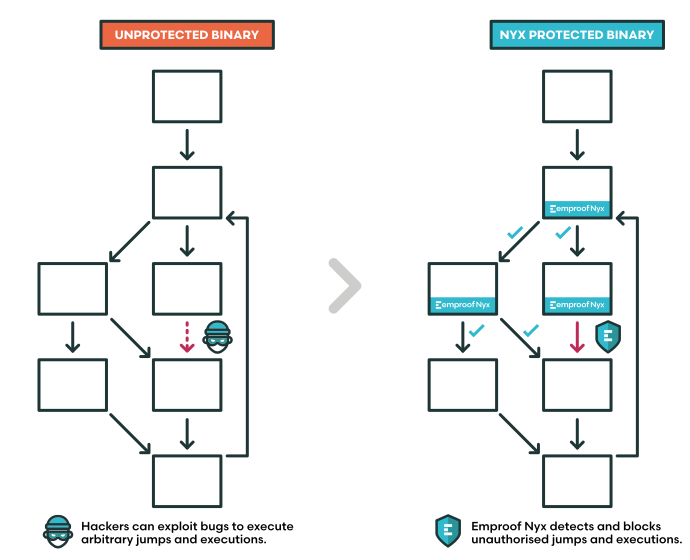
Almost no current device, compiler, or controller has this vital exploit mitigation that blocks many attack vectors and bug classes. Control Flow Integrity (CFI) prevents malicious changes to the intended execution flow of a program. While CFI does not directly prevent exploitation of bugs, it prevents attackers from misusing bugs to overwrite function pointers. Attackers may hijack control flow by corrupting function pointers, redirecting the program to execute malicious code. Emproof Nyx automatically analyses vulnerable code segments and injects control flow checks.
Stop Buffer Overflows: How Emproof Nyx uses canaries to protect code
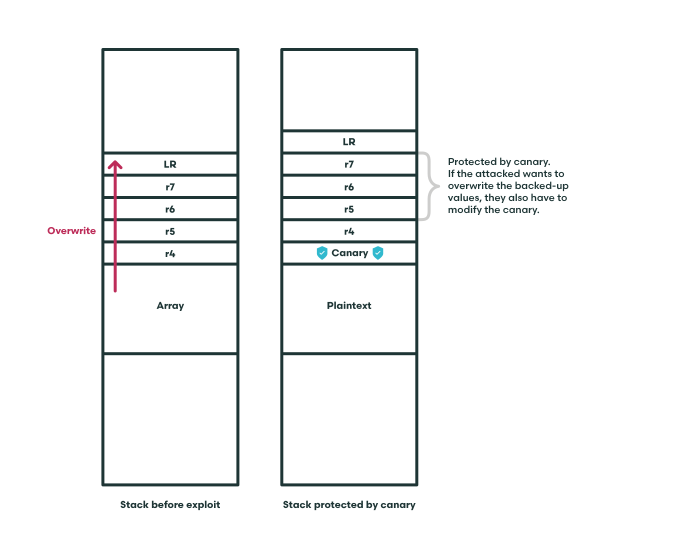
Buffer overflows can lead to malicious overwrites of stack-saved registers, allowing attackers to redirect execution or use ROP chains. Emproof Nyx automatically inserts randomised canaries into vulnerable functions, preventing return address overwrites without also overwriting the canary. Detected buffer overwrites trigger a user-defined exploit response (e.g., endless loop, reset). Configuration profiles for Emproof Nyx can whitelist or blacklist specific functions for protection.